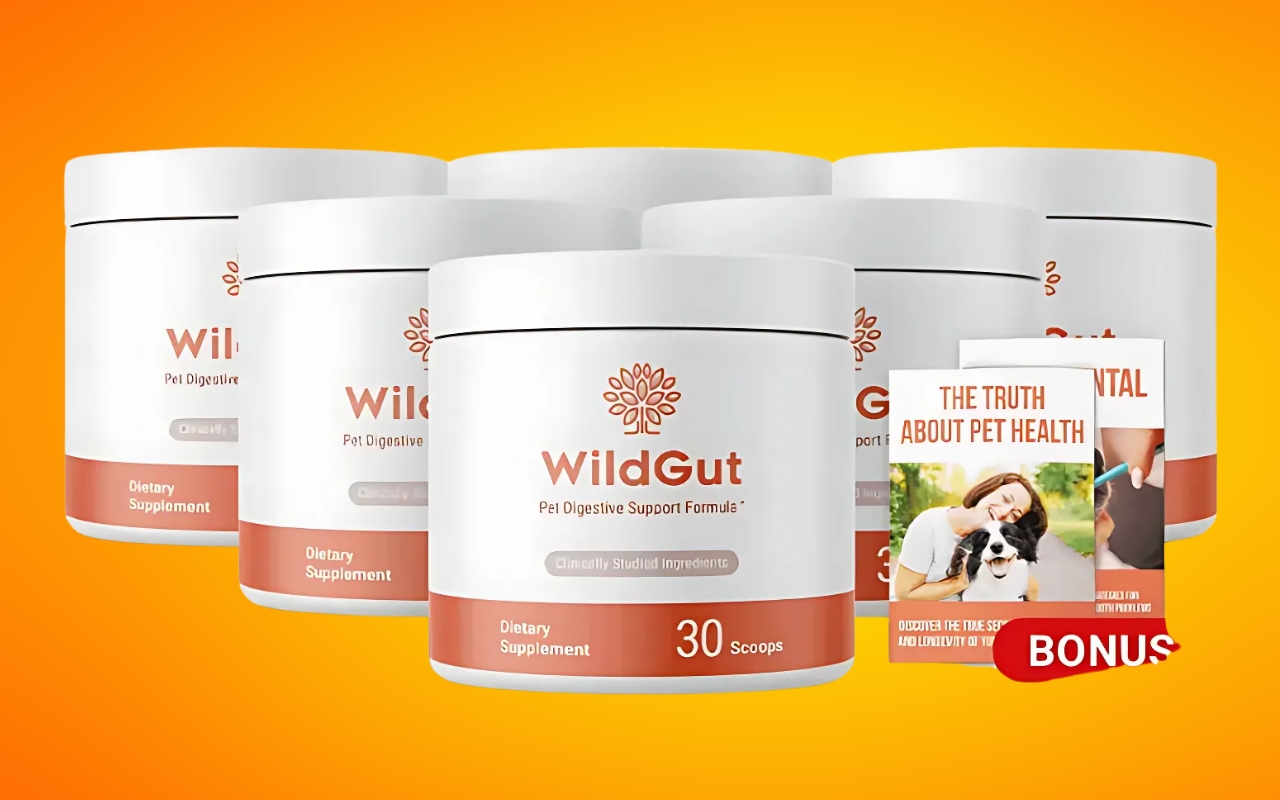
Has your dog been acting differently lately? Constant scratching coupled with discharge from the ears, bad breath, and general weakness keeping you up at night? In that case, it might be time to get a proper diagnosis, preferably from a veterinarian. If all signs point to a gut imbalance, which is often the case, it's essential first to get confirmation from a vet and, second, explore ways to restore balance. Our editorial team found one solution that seems to make sense. Research has shown that the selected ingredients are well-tolerated and canine-friendly. Keep reading to learn more about WildGut today.
What is WildGut?
WildGut is a probiotic dietary supplement designed mainly to improve dog health. Probiotics are beneficial or “good” bacteria that make up the gut microbiome. Billions of them exist in the form of bacteria and yeast, supporting the overall gastrointestinal system. As emphasized in one source, these friendly bacteria assist in the digestion of food, eradicating pathogens, increasing the absorption of nutrients and vitamins, and strengthening their immune function. The strategy behind this formula consists of three phases, the main one being destroying Candida albicans.
They insist that Candida albicans disrupt digestive function and increase the risk of skin problems, tiredness, patchy fur, and premature aging in dogs. That's not all; when left untreated, dogs are at risk of poor native immune function and leaky gut syndrome. Considering the main target under question, the next section highlights the dangers of Candida albicans and the steps taken to offset its side effects through WildGut, respectively.
Boost your dog's health—order WildGut probiotics today!
How does WildGut work?
The WildGut formula works in three phases. The first phase, “The Kill Phase,” entails destroying Candida albicans. Candida albicans is a type of yeast that naturally resides in the body. An overgrowth in this type of yeast results in a fungal infection called candidiasis. According to one source, this fungal infection is a rare condition in dogs, but once infected, it can have devastating effects on their skin, namely in their ears, skin folds, mouth, anus, eyelids, mucous membranes, and gastrointestinal tract.
Candidiasis can affect any dog breed and gender, with immunocompromised dogs at the most significant risk of infection. Immunosuppression is just one risk factor; others include Cushing's disease, prolonged antibiotic use, joint injections, diabetes mellitus, and corticosteroid therapy. Some common symptoms reported by pet owners include a reduction in appetite and weight, fever, feelings of weakness, and certain skin lesions.
As for causes, an animal's immune health might dictate whether they are at risk of a fungal infection. More precisely, there is reason to believe that a poor immune system might be incapable of controlling the yeast population, thereby affecting other organs. In their video presentation, the creators of WildGut highlighted that candidiasis might lead to a leaky gut.
This isn't surprising, as Candida overgrowth has been demonstrated to deplete good bacteria in the gut, disrupting balance. Moreover, it increases inflammation, which in turn creates a gap between the cells that line the intestines, allowing yeast and toxic byproducts that normally exit the body via the digestive tract to enter the bloodstream. It's no wonder the majority of the supplement focuses on the Kill Phase. The remaining two phases, “The Improvement Phase” and “The Protect Phase,” aim to deliver key nutrients that improve the gut microbiome and protect it from future exposure to fungus, respectively.
Say goodbye to gut issues—try WildGut for your furry friend!
What ingredients are in WildGut?
The main ingredients in WildGut are threefold. The first set of ingredients is probiotics, most of which are naturally found in the canine gut. These include:
Lactobacillus Acidophilus
Lactobacillus acidophilus (L. acidophilus) is a type of beneficial bacteria found in the intestines. Not only is this strain the most commonly used, but it also happens to have the ability to displace Candida populations. In particular, they have been shown to increase the production of antibodies to C. albicans antigens, which inhibits their growth and quantity. Another source highlighted that specific Lactobacillus and Bifidobacterium strains can help to manage yeast, support immune function, prevent anxiety, reduce stress, and ease symptoms linked to diarrhea and food allergies, listing L. acidophilus, B. animalis, B. longum, and L. rhamnosus as supportive strains.
Bifidobacterium Breve
Bifidobacterium breve (B. breve) is a gram-positive bacterium known for its rich enzyme profile that helps break down starches, sugars, and other components of breast milk. This means increased digestion health and healthy absorption of nutrients. A study examining the benefits of probiotics underscored that B. breve and other Lactobacillus strains are known to stimulate the production of host-derived HDPs or host defense peptides. HDPs are antimicrobial peptides with immunomodulatory activities, assisting in boosting immune defense.
Additionally, certain strains, including B. breve, increase the production of short-chain fatty acids, which are believed to unleash physiological activities. Finally, several studies have concluded that Lactobacillus, Bifidobacterium, A. mucinaphilia, and SCFAs stimulate the production and secretion of mucins, critical for strengthening and protecting the gut's lining from pathogens and toxins, facilitating smooth bowel movement, increasing immune defense, and maintaining a balanced gut microbiome.
Lactobacillus Casei
Lactobacillus casei (L. casei) is yet another friendly bacteria found in the canine and human gut. It is touted for its ability to treat a series of digestive symptoms, including, but not limited to, colic, constipation, Crohn's disease, IBD, IBS, lactose intolerance, and ulcerative colitis. A different source argued that since most of a dog's immune system rests in the intestinal tract, Lactobacillus bacteria (like L. casei) can benefit their immune system.
Others found in the WildGut proprietary blend are:
- Lactobacillus Rhamnosus and Plantarum: Supports healthy colon walls in dogs with IBS and has been shown to decrease antibiotic-related diarrhea.
- Bifidobacterium Longum: Acts on the gut-brain axis to reduce signs of stress while easing diarrhea and allergy-related symptoms.
- Bacillus subtilis: Increases gut colonization, possibly protecting against infections caused by pathogens in the intestines.
Amylase
Amylase is a type of digestive enzyme that the body (even dogs' bodies) produces. It is one of four main types, helping break down starches into smaller carb molecules, writes one source. Since this digestive enzyme is not made in enough quantities, supplementation is deemed imperative. Given that most dog food is processed or cooked at high temperatures and pressures, live enzymes in raw food are likely killed, depleting dogs of enzymes as a whole.
Saccharomyces Boulardii (3 Billion CFU)
Saccharomyces boulardii, like Candida albicans, is a type of yeast, but this one is a probiotic. Just like people use good fat to eliminate bad fat, S. boulardii has been shown to exhibit anti-Candida properties, thereby preventing populations from flourishing. Furthermore, they are thought to reduce the risk of Candida moving from the gut to other body parts. Such strong effects are associated with its rich source of caprylic acid, an antifungal substance that limits Candida infestation and inflammation.
Strengthen your dog's immunity with WildGut—shop now!
Frequently Asked Questions (FAQ)
Q: Is WildGut safe?
A: WildGut is considered a safe dietary supplement for dogs for many reasons. First, each jar has been manufactured in the USA in an FDA-registered, GMP-certified facility. Second, the creators claim to have manufactured small batches at a time to ensure potency, purity, and overall quality. To further strengthen the aforesaid factors, each batch has been tested by a third-party laboratory. Finally, all servings are free of GMOs and artificial ingredients that might irritate dogs. Considering everything, getting a second opinion from a veterinarian won't hurt, as probiotics are normally beneficial in poor gut and immune functions, and there is clear evidence of Candida overgrowth.
Q: Are there any side effects to taking WildGut?
A: The creators insist that the risk of side effects is low. So far, thousands of pet owners have administered this formula with no reported side effects. But as always, consulting a veterinarian is highly recommended. If they give the go-ahead, starting small and assessing the formula's overall tolerance is critical for dogs' safety.
Q: How should I administer WildGut to my dog?
A: The recommended serving size is one scoop, once daily, with meals or as directed by a veterinarian. Pet owners are strongly urged to increase their dogs' water intake to ensure proper delivery of nutrients.
Q: What is the estimated arrival time on WildGut shipments?
A: Shipments to the contiguous United States should take 5 to 7 business days, including processing times. For international shipments, contacting customer support might be a good idea to see whether this is even an option.
Q: Is WildGut protected by a money-back guarantee?
A: Yes, WildGut purchases are protected by not one but three guarantees. The first is a 180-day money-back guarantee. If pet owners do not see any improvement in their dogs' health within the first six months of taking this supplement, customer support can be contacted for a full purchase price refund on all bottles used or unused.
The second is a doctor guarantee, which states that if after the first six months of use, the veterinarian isn't amazed by the improvements in dogs' health markers, the creators will not only provide a full purchase price refund but will also purchase a competitor's product of choice. Finally, there's the give-back guarantee, which is simply the creators pledging to donate a fraction of the sales to help kids. To learn more about the eligibility requirements, consider one of the following points of communication:
- Email: [email protected].
- Phone: 1 (866) 450-0110
Q: How much probiotics do dogs need?
A: The current recommendation for dogs is between 1 and 10 billion colony-forming units (CFUs) daily. Anything in excess could irritate the gut, digestive system, and immune health.
Improve your dog's digestion—get WildGut today!
Ordering WildGut
Each WildGut jar has been manufactured to last roughly one month. The creators insist that the one-size-fits-all approach is suitable here, as this formula consists of probiotics. That said, starting small and gradually increasing the dose to reach the maximum of one scoop might be a good approach for safety reasons. Nevertheless, assuming that each jar lasts a month, here is a quick rundown of the prices:
- 1 WildGut jar: $69 each + $9.99 in S&H
- 3 WildGut jars: $59 each + free S&H
- 6 WildGut jars: $49 each + free S&H

Orders of 3 or 6 WildGut jars also guarantee immediate access to the following digital reports:
- Report #1. The Truth About Pet Health reveals the biggest scams out there.
- Report #2. Doggy Dental eBook, consisting of proven and cost-effective strategies for dealing with canine tooth problems
The Wrap Up
To reiterate, WildGut is a probiotic supplement designed to help dogs overcome the consequences of Candida overgrowth. Candida can positively contribute to the gut microbiome when found in healthy quantities. Unfortunately, excess presence weakens the immune system, creates a gap between cells and the gut lining, and allows toxins and other buildups that should exit the body to spend more time in the bloodstream (also known as the leaky gut syndrome). The consequences are numerous, ranging from mental and physical health to emotional and organ functioning. Some of the common symptoms include poor digestive function, increased skin lesions, and a lack of energy, among a growing list.
Thankfully, dogs generally tolerate probiotics well, making this approach a viable option. This begs the question of whether dogs can take probiotics made for humans. The short answer is yes, and the long answer is relatively neutral. This is because, while human probiotics are not harmful, they might not provide the same benefits. On the whole, dogs' gut microbiomes differ from humans; therefore, the formulation must be tailored to canines for optimal benefits. The main probiotics naturally found in dogs' guts are also found in the formula, with others believed to affect dog health positively.
Thanks to the selection of probiotics, the creator's goal of eradicating the production and spread of Candida albicans might be achieved. In light of all this information, it's always good practice to sit down with a veterinarian since they understand their patients' needs and can confirm the safety of the doses and the effect of the strain composition, to say the least.